Why Care Providers Are Becoming Prime Targets for Cyber Threats (And What To Do About It)
Care providers today face a challenge that didn’t exist a decade ago.
It’s not just staffing, compliance, or funding.
It’s data.
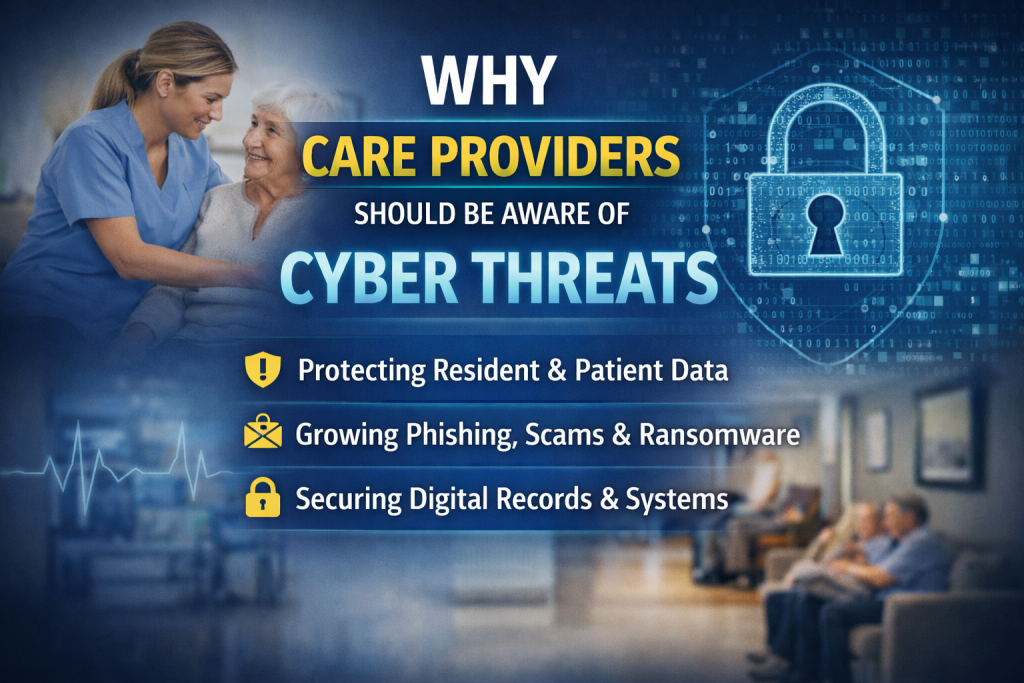
From resident records and medication details to staff files and family communications—your organisation now depends on digital systems to deliver safe, consistent care. And that makes you a target.
The Reality: Care Providers Are Increasingly at Risk
Healthcare data is among the most sensitive—and valuable—data there is.
It includes personal, medical, and sometimes financial information. Under GDPR, this is classified as “special category data,” which requires the highest level of protection.
That’s exactly why cybercriminals are focusing on the sector.
For care homes and home care providers, the risks are even greater:
- Smaller IT budgets than hospitals or large clinics
- Reliance on multiple systems (rostering, care plans, HR, finance)
- Staff working across locations and devices
- High turnover, increasing the chance of human error
And unlike other industries, downtime isn’t just inconvenient—it can impact care delivery.
It’s Not Just About Hackers
When most people think of cybersecurity, they imagine sophisticated attacks.
But in reality, many breaches come from everyday issues:
- A lost or stolen laptop with resident data
- Staff sharing login credentials
- Emails sent to the wrong recipient
- Weak or reused passwords
- Outdated systems with known vulnerabilities
In a care environment, where teams are busy and under pressure, these risks are amplified.
Compliance Isn’t Optional (And It’s Getting Stricter)
Irish healthcare providers must comply with GDPR and NIS 2—regulations that require:
- Strict control over who can access data
- Clear policies on how data is stored and shared
- Rapid reporting of breaches (within 72 hours)
- Ongoing staff training and awareness
But compliance isn’t just about avoiding fines.
It’s about protecting the trust placed in you by residents and their families.
Digital Transformation Is Accelerating
The shift toward digital healthcare is only speeding up.
Initiatives like Ireland’s Digital for Care 2030 are pushing for more connected, data-driven care services—improving outcomes, efficiency, and access.
That means more systems, more data, and more responsibility.
Care providers who don’t adapt their IT and security alongside this shift risk falling behind—or worse, becoming vulnerable.
What Good Looks Like for Care Providers
The goal isn’t to become an IT expert.
It’s to put the right foundations in place so your systems support your care—not put it at risk.
That typically includes:
1. Secure Access to Data
Only the right people should access sensitive information—and only when they need it.
2. Reliable Backups
If something goes wrong (cyber attack, hardware failure, human error), your data must be recoverable quickly.
3. Proactive Monitoring
Issues should be identified and resolved before they impact your team or residents.
4. Staff Awareness
Your people are your first line of defence. Simple training can prevent most common incidents.
5. Ongoing Support
When problems happen—and they will—you need fast, expert help.
The Bottom Line
Technology in care settings isn’t going away.
If anything, it’s becoming more central to how care is delivered.
The organisations that succeed over the next 5–10 years won’t just be those with great care standards—they’ll be the ones who combine those standards with secure, reliable, and well-managed systems.
Because in today’s world, protecting your data is part of protecting your residents.